Infolinks Ads

Pages

Wednesday, 20 July 2011

2011 Toyota Venza FWD I4


With one very configurable trim level, the Venza offers a range of possibilities. The Venza successfully combines the comfort and refinement of the Camry with the cargo-carrying capacity of a wagon. The all-wheel drive option means the Venza is sure-footed in any situation. The base engine earns a 21 mpg city and 27 mpg highway rating from the EPA, while even the all-wheel drive with a V6 gets 18 mpg city/25 mpg highway.
There is only one Venza trim, which keeps things simple, but it does have quite a few options, starting with the engine. The 2.7L 4-cylinder makes 182 hp and 182 lb-ft of torque; the 3.5L makes 268 hp and 246 lb-ft of torque. Either engine can be had with front-wheel or all-wheel drive and a 6-speed automatic transmission is standard across the board.

The Venza has SUV touches like 4-wheel independent MacPherson strut suspension and a reasonable 3500 pound maximum towing capacity. It also has safety systems such as anti-lock brakes with brake assist, traction control and electronic brake force distribution. The Venza also includes Smart Stop Technology, which reduces engine power when the brake is firmly applied to bring the vehicle to a stop, even if the gas pedal is being pressed. Further safety systems include front airbags, front and side curtain airbags, driver's knee airbag, tire pressure monitoring and hill start assist.

Venza comes standard with creature comforts like dual-zone climate control, 6-speaker stereo with CD/MP3/iPod/Bluetooth capabilities, 8-way power driver's seat, cruise control, illuminated cup holders and rear-seat reading lamps. The cloth seats can be upgraded to leather with heat, and the carbon-fiber style standard interior trim can be swapped for the optional mahogany woodgrain-style trim. A backup camera, a voice-activated navigation system and a rear-seat DVD system are also available.
Very little has changed for the 2011 Venza, as it was a brand-new model in 2009 and hasn't needed even a refresh yet. Four-cylinder and 6-cylinder engines are available, as is all-wheel drive. The Venza holds the distinction of being the first Toyota passenger car with the STAR Safety System as standard equipment.
SUV styling with passenger-car comfort; choice of engines and available all-wheel drive; spacious interior
With one very configurable trim level, the Venza offers a range of possibilities. The Venza successfully combines the comfort and refinement of the Camry with the cargo-carrying capacity of a wagon. The all-wheel drive option means the Venza is sure-footed in any situation. The base engine earns a 21 mpg city and 27 mpg highway rating from the EPA, while even the all-wheel drive with a V6 gets 18 mpg city/25 mpg highway.

2011 Toyota Venza AWD


Toyota has endured some tough knocks lately, with a series of recalls over the past year, as well as constantly being lambasted by critics for having "boring" cars. The Venza crossover breaks out of Toyota's safe and conventional mold, at least from a styling standpoint.
The 2011 Venza is a 4-door, 5-passenger sport-utility, available in 4 trims, ranging from the FWD I4 to the AWD V6.
Upon introduction, the FWD I4 is equipped with a standard 2.7-liter, I4, 182-horsepower engine that achieves 21-mpg in the city and 27-mpg on the highway. The AWD V6 is equipped with a standard 3.5-liter, V6, 268-horsepower engine that achieves 18-mpg in the city and 25-mpg on the highway. A 6-speed automatic transmission with overdrive is standard on both trims. 

In total passenger volume, the Highlander trounces the Venza by more than 37 cubic feet. In cargo capacity, the Venza's Celtic-themed kin bests it by more than 10 cubic feet with the rear seats up, and by a substantial 25 cubic feet with the rear seats folded. Max towing capacity on the Highlander is also 1500 pounds greater than on the Venza, with a nearly identical powertrain. The key difference? The V-6 Highlander still soldiers on with a five-speed automatic, while the V-6 Venza gets a six-speed.The one, and increasingly important, area in which the Venza bests its larger sibling is fuel economy. The all-wheel-drive V-6 Highlander rates 17/22 on the EPA cycle, with the sleeker, 400-pound lighter Venza AWD returning 18/25. For those seeking even greater fuel economy, the Venza is also available with a 2.7-liter four-cylinder shared with the base Highlander that returns 21 city and 27 highway mpg on the front driver, and 20/25 on the all-wheel-drive model. Considering the minimal fuel economy penalty with the V-6, and the fact it offers 86 more horsepower, go with the six.
As with many current Toyotas, the driving experience isn't especially engaging. However, considering the vehicle's intended mission, canyon-carving probably wasn't a high priority on the suspension engineers' checklist. Getting back to the theme of sacrificing function for beauty, however, the 20-inch wheels deliver a ride firmness that hints at handling prowess that the suspension simply can't deliver. Taking a corner at anything more than a moderate pace elicits screeches and and howls from the tires. Appreciate the dubs for their style, but don't expect dramatic performance.
Although the Venza cuts an unmistakably dashing profile on the outside, the interior is a mixed bag. There's nothing exceptionally objectionable about the styling or materials, but the interior does not have the same cohesiveness and elegance as the exterior. There's an odd, indeterminate texture applied across much of the interior plastic that is an attempt at a woodgrain or faux leather, but succeeds at neither. A similar and more subdued texture is applied on the leather seats, and it works a little better, but still comes across as a bit contrived.
Ergonomically, the Venza is somewhat of an adjustment. When I first sat down and oriented myself with the controls, I looked around for a display readout for the air conditioning controls. Somewhat counterintuitively, the temperature and fan settings are displayed on a 3-inch-square LCD display in the middle of the dashboard, up high in a central unibrow area. It's not that jarring once you get used to it, but the placement seems like an afterthought.
Compared to its most logical peers, the Honda Crosstour, Nissan Murano, and Ford Edge, the Venza offers similar capabilities. Comparably equipped, the prices are pretty close, too. So what is there to recommend the Venza over its rivals? Well, if you're predisposed to think favorably of Toyota products, it has that going in its favor. It's the best-looking of the bunch, especially from a rear three-quarter angle. However, the interior has the oddest layout and materials.
Toyota often has mixed results when it tries to be too edgy, and the Venza is a rolling example. While the exterior is stylish and eye-catching, the interior is an odd mishmash of unique and parts-bin, premium and low-rent. If I were in the focus group for a mid-cycle refresh, I would suggest a revamp of the interior, using soft-touch, conventionally textured plastics, quality leathers, and contrast stitching. And perhaps some memory functions for the steering wheel adjustment and driver's seat.The danger in moving too upscale with the Venza is that it would quickly start stepping on the toes of its more patrician cousin, the Lexus RX, in both price and market positioning. Such is the peril when you also have a luxury brand in your portfolio.
As it stands, the Venza is a stylish alternative to the conventional midsize SUV, and would likely fit the needs of small (two or fewer children) families looking for day-to-day family transport. With some fine-tuning to the interior trim, it could be a great crossover instead of a good one.

Monday, 11 July 2011

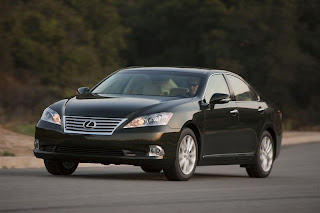
2011 Lexus ES 350


Re-rating the ES 350 to use regular unleaded brings a power loss of 4hp & 6lb.ft of torque, but the savings at the pump are sure to make up for such a minor decrease. Even more than that, it’s a smart move as more and more cars move into direct competition with Lexus’ best selling sedan.
For the full details on the 2011 ES 350, I’ve included the press release after the jump.

Lexus ES 350 Continues to Symbolize Luxury and Style

• Lower Cost of Ownership with Regular Fuel
• Standard 10-Way Power Front Seats and Leather Trim Provide Interior Oasis
• Standard  Brake Override System

After amenity upgrades and styling enhancements last year, the Lexus ES 350 cruises into the 2011 model year using 87-octane regular fuel.  2011 ES 350 customers will continue to enjoy a smooth and quiet ride as the cost of ownership is reduced.  With the new fuel recommendation of 87-octane gasoline, the ES 350 generates 268 horsepower and has EPA fuel economy estimates of 19 miles per gallon in the city and 27 on the highway.  ES 350 will be enrobed with one new exterior color, Deep Sea Mica, which replaces Black Sapphire Pearl.

Engine/Transmission/Drivetrain/Performance
The ES 350′s aluminum 3.5-liter V6 produces 268 horsepower at 6,200 rpm and 248 lb.-ft. peak torque at 4,700 rpm. The chain-driven camshafts employ Dual Variable Valve Timing with intelligence (Dual VVT-i) for optimal performance and efficiency at all engine speeds.

The six-speed automatic Electronically Controlled Transmission with intelligence (ECT-i) provides a sequential manual shift feature for a more involved driving experience when desired. Shifting strategy adapts to driver input, with rapid downshift response.

Chassis/Body/Suspension/Tires/Brakes
The ES 350 owes its smooth, quiet ride in large part to a rigid unibody structure that allows the four-wheel independent suspension to be tuned to provide responsive handling agility and ultra-smooth ride quality. The low 0.28 coefficient of drag (Cd) helps minimize wind noise while also helping to maximize highway fuel efficiency. Standard 17 x 7-inch aluminum alloy wheels with a split five-spoke design carry 215/55R17 all-season tires.  A full-size spare wheel/tire is available.

Standard Vehicle Stability Control (VSC) with traction control system integrates the Anti-lock Braking System (ABS), Electronic Brake-force Distribution (EBD) and the Brake Assist (BA) safety feature.  The VSC cut-off switch is useful if it becomes necessary to extricate the car from deep snow or other difficult conditions, such as mud or sand.

Safety/Security Features
The ES 350 received a brake override system as an additional measure of consumer confidence mid-2010 model year beginning with vehicles produced in January 2010.  The braking system enhancement automatically reduces engine power when the brake pedal and the accelerator pedal are applied simultaneously under certain driving conditions.

A reinforced front- and rear-structure passenger compartment forms the foundation for passive safety in the ES 350.  In addition to dual-stage front airbags and front seat-mounted side airbags, the Lexus Supplemental Restraint System includes rear seat-mounted side air bags, side-curtain airbags that extend from the A-pillar to C-pillar and a knee airbag for both the driver and front passenger, for a total of 10 airbags throughout the cabin.

The optional Pre-Collision System (PCS) can help reduce collision damage. The package includes Dynamic Radar Cruise Control, which uses millimeter-wave radar to measure and help maintain a pre-set distance from a vehicle traveling ahead.  The multi-information display within the combination meter will show a car icon with the selected following distance.

If, based on a variety of inputs, PCS determines that a collision is unavoidable, the system preemptively retracts the front seat belts and pre-initializes BA so that increased braking will be applied the instant the driver depresses the pedal. Active Braking can automatically apply the brakes if the driver fails to react to system warnings.

The optional dual-swivel Lexus Adaptive Front Lighting System (AFS) helps illuminate a turn or curve as the driver steers into it. A medium-to-high speed mode (over 19 mph) allows both the right and left front headlamp bulbs to swivel toward the direction of the turn at the same time.

Luxury/Comfort/Convenience
Lexus’ craftsmanship and attention to detail provide true luxury by design in the ES 350. Standard leather-trimmed seating is available in three colors.  A one-touch tilt/slide power glass moonroof is standard, as well as a dual-zone automatic climate control system, 10-way power front seats (with standard driver memory) and a power tilt-and-telescoping steering wheel.

The standard multi-information display, located in the combination meter, is easy to operate.  Its main feature is a trip computer that provides outside temperature, driving range, fuel consumption and average speed readouts.  An Eco Driving indicator helps encourage economical driving.  The display also includes an oil maintenance reminder and system warnings.

The standard leather-trimmed steering wheel integrates easy-to-use controls for the audio system, trip computer, and multi-information display, as well as voice control for the available navigation system when so equipped.  Heated exterior mirrors help melt away morning fog or frost, while rain-sensing windshield wipers help the driver see more clearly.

Convenience details abound throughout the ES 350, including illuminated front cup holders and an interior lighting system.  An illuminated entry system lights the interior foot wells and the exterior with puddle lamps.  The auto-dimming rearview mirror features an integrated digital compass.

The SmartAccess keyless entry and push-to-start ignition system allows the driver to enter and start the car without needing to remove the access fob from pocket or purse.  In addition, when the system recognizes one of the two key fobs, it adjusts the seats, mirrors and steering wheel based on the driver settings associated with that particular key fob.   The standard HomeLink® transmitter can control compatible garage-door openers and home-security devices. Using the Lexus Memory System feature, the driver can tailor numerous vehicle preferences, including lighting, power windows and moonroof, steering wheel, and door lock control.

The standard Lexus Premium Audio system includes an in-dash, six-disc CD changer, Automatic Sound Levelizer, iPod®/USB connectivity, Bluetooth® hands free phone capability and music streaming, and an integrated XM Radio receiver (complimentary 90-day trial subscription included).  When connected to the USB port, the iPod can be controlled through the audio system or steering wheel controls, while information such as names for the artist are displayed.

Luxury Options
The customer can “layer” luxury in the ES 350 by adding the Ultra Luxury Package, or by selecting from a number of standalone options which include heated and ventilated front seats, HID with AFS, and Intuitive Park Assist (IPA). The IPA system uses ultrasonic sensors to detect objects close to the car’s front and rear bumpers, alerting the driver and showing distance to objects in the multi-information display.

The Ultra Luxury Package includes a panorama glass roof; perforated semi-aniline leather-trimmed seating; double-contrast stitching for the seats, console and door trim; power rear sunshade; passenger memory; the HID/AFS lighting system; and a wood- and leather-trimmed steering wheel and shift knob. Exclusive Liquid Graphite-finish 17-inch 10-spoke alloy wheels add a distinctive touch.  Vehicles with the Ultra Luxury Package also have an exclusive Black and Saddle interior.

The available touch-screen Lexus Navigation System with rear back-up camera allows the driver to enter a destination using the updated Voice Command casual-language voice recognition.  The system integrates control for the Lexus Personalized Settings feature and adds Bluetooth® phonebook download.

Voice command, a casual-language-based voice recognition feature, is standard on navigation-equipped vehicles.  This technology allows the driver to give fewer and more flexible, conversational commands in a specific order for easier access to audio, climate, and navigation system functions to help drivers focus more on the road ahead.

The optional Mark Levinson® Premium Audio System is available in conjunction with the navigation system. This leading-edge design uses 10 channels of amplification with 300 watts total output at only 0.1 percent Total Harmonic Distortion (THD). The system plays through 14 speakers in a 7.1-channel surround sound speaker architecture. The Mark Levinson system can play conventional CDs and DVDs, and MP3-formatted CDs. DVD movies can be viewed on the navigation system’s color seven-inch touch screen when the parking brake is engaged.

The Lexus ES 350 also offers a telematics system, Lexus Enform® with Safety Connect®, available by subscription.  Complimentary one-year trial subscriptions are included on all purchases of new Lexus vehicles equipped with these features.  Safety Connect is standard on all vehicles while Lexus Enform with Safety Connect is on all vehicles equipped with the optional Navigation system.  The Lexus Enform and the Safety Connect response centers operate 24 hours a day, 7 days a week—every day of the year.

Lexus Enform vehicles are factory ready for subscriptions to a variety of innovative XM services including XM NavTraffic®, XM NavWeather™ and  XM Sports and Stocks services.  XM services require separate XM subscriptions. The XM Sports and Stocks service is included with an XM Radio subscription.  All XM services offer complimentary 90-day trial subscriptions.

Exterior Design
The ES 350’s elegance is reflected in its distinct front fascia that features arrowhead-shaped headlamps, integrated fog lamps, and chrome grille and grille surround.  Chrome body side molding further underscores the car’s refined character and demonstrates its dynamic design.  The arrowhead shaped design motif is also echoed in the large tail lamps.  Side mirrors with integrated turn signals accent the ES 350’s classy exterior.

Interior Design
Built on a 109.3-inch wheelbase, the midsize ES 350 provides a roomy and inviting interior. The driver and passengers are treated to intelligent, elegant luxury, with touch points that convey quality and controls that respond fluidly.

The high level of Lexus craftsmanship is immediately evident in the ES 350, with bright, clear Optitron® gauges, premium wood, as well as polished metal and leather accents that echo prestige-luxury models.

Warranty
All new Lexus vehicles come with a 48-month/50,000-mile basic limited warranty with roadside assistance for 48-months/unlimited miles. Powertrain and restraint system coverage is provided for 72 months/70,000 miles. Corrosion perforation protection is covered for 72 months, regardless of mileage.


2010 Porsche Panamera Sedan

 What's New for 2010

The 2010 Porsche Panamera is an all-new performance luxury sedan.

Introduction

It's not every year we get an all-new Porsche model, let alone a four-door that literally breaks the mold for cars bearing that iconic red, black and gold crest. Porsche toyed with the idea of a four-door 911 for years, but the prospect of a more practical, everyday version of the world's most iconic sports car never materialized. The 2010 Porsche Panamera isn't a four-door 911 -- the engine's in the front, for one thing -- but the 911's spirit is alive and kicking in this remarkable luxury sedan that's just as happy carving up a winding back road as it is cruising down the interstate.
The Panamera is built on a new platform and has a wheelbase that's a bit longer than traditional midsizers like the BMW 5 Series and Mercedes E-Class but shorter than those of larger sedans like the 7 Series and S-Class. At 76 inches wide, the Panamera's got more girth than all of them, but its 55.8-inch height makes it the Tom Cruise of the cast.
This is one undeniably sleek and sporty automobile. Yet that low stance doesn't mean passengers are treated to a claustrophobic cabin unfriendly to those blessed with height or grand coiffures. On the contrary, the front compartment is eminently accommodating, and the two-person backseat has head- and legroom to spare. Moreover, those rear bucket seats can be optioned with eight-way power adjustability, heating, cooling and, believe it or not, a refrigerated box.
If mentioning power backseats and a refrigerator in the second paragraph of a Porsche review seems silly, remember that these are the types of things that make the Panamera a legitimate contender in the premium luxury sedan segment. Happily, the Panamera has the traditional Porsche bases covered as well.
Under the hood, the Panamera employs a couple scintillating engines derived from the Cayenne collection, starting with a 400-horsepower 4.8-liter V8 in base models and upgrading to a 500-hp version in the Panamera Turbo. You might be concerned that four doors and a whole lot of girth (the Turbo weighs 4,300 pounds) dull the driving experience, but you can set aside those concerns, as the Panamera S, 4S and Turbo handle and steer fantastically and can keep pace with most sports cars. The fact that you can drive four people hundreds of miles in rapid, luxurious comfort is doubly impressive given this car's astonishing performance capabilities.
Of course, should you need an extra fifth seat, you'll obviously be better served by a BMW 750Li, Maserati Quattroporte or Mercedes-Benz S-Class. The 2010 Porsche Panamera can also get pretty pricey if you start liberally checking the myriad option boxes. But at the end of the day, Porsche's first legitimate sedan is an incredible machine that raises the bar for high-performance sport sedans. For 2010, we got an all-new Porsche -- alert the history books.

Body Styles, Trim Levels, and Options

The 2010 Porsche Panamera is a four-passenger, four-door hatchback sedan. It is available in S, 4S and Turbo trim levels, which correspond to drivetrain choice. The Panamera S comes standard with 18-inch wheels, adaptive suspension dampers, rear parking sensors, a sunroof, adaptive bi-xenon headlights, a power rear hatch, dual-zone automatic climate control, a tilt-telescoping steering column, eight-way power front seats, driver memory functions, heated front seats, leather upholstery, a 60/40-split rear seatback and rear bucket seats.
Also standard are a hard-drive-based navigation system and an 11-speaker CD audio system. The Panamera 4S differs only in that it has all-wheel drive. The Panamera Turbo adds a turbocharged V8, 19-inch wheels, adaptive air suspension with load-leveling and adjustable ride height, front parking sensors, keyless ignition/entry, 10-way power front seats and adjustable lumbar support, expanded driver memory functions, a power-adjustable steering column, heated rear seats, a full leather interior, an Alcantara headliner and a 14-speaker Bose surround-sound audio system.
In typical Porsche tradition, a very lengthy list of (expensive) options allows buyers to easily customize their cars. Other than its engine, all of the Turbo's extra features are available on the S and 4S.
Other options include ceramic composite brakes, variable-assist power steering, Porsche Dynamic Chassis Control (adaptive antiroll bars and a limited-slip rear differential), 20-inch wheels, a rear wiper, ventilated front and rear seats, eight-way power rear seats (switches seat folding to 40/20/40), adaptive sport front seats that include adjustable side bolsters, "ruffled" leather upholstery, a heated steering wheel, four-zone climate control, rear sunshades, rear ambient lighting, a rear-seat refrigerator, Bluetooth, a rearview camera, voice control, a rear-seat entertainment system, satellite radio, an iPod interface, a six-CD/DVD changer and a 16-speaker Burmester high-end surround-sound system.
The Sport Chrono Package Plus adds analog and digital stopwatches and adjustable engine and suspension settings. There are also countless ways to customize practically every interior surface with different shades of leather, wood, metal, carbon fiber and paint.

Powertrains and Performance

The Porsche Panamera S and 4S are powered by a front-mounted 4.8-liter V8 good for 400 hp and 369 pound-feet of torque. The S is rear-wheel drive, the 4S all-wheel drive. The Panamera Turbo is also AWD, but gets a twin-turbocharged version of the same V8 for a grand total of 500 hp and 516 lb-ft of torque. All Panameras come with the Porsche Doppelkupplungsgetriebe (PDK), a seven-speed dual-clutch automated gearbox whose name can also be said after a sneeze.
Porsche estimates that the S and 4S will accelerate from zero to 60 mph in less than 5 seconds, while the Turbo will do the sprint in 4 flat. Fuel economy estimates were not released as of this writing, but in an interesting nod to hybrid-powered cars, every Panamera comes standard with auto stop/start technology that shuts off the engine when you come to a stop to conserve fuel.

Safety

Every 2010 Porsche Panamera comes standard with antilock brakes (with brake assist), stability and traction control, front-seat and rear-seat side airbags, side curtain airbags and front knee airbags. Ceramic composite brakes and a rearview camera are optional.

Interior Design and Special Features

From the driver seat, the Panamera's interior evokes the 911's. Major controls are easy to reach, yet there's more space in virtually every dimension. While most competing luxury sport sedans these days have some sort of controller interface (BMW's iDrive, for instance) Porsche has resisted the trend. Consequently, the entire center console is covered with buttons, which may or may not be to one's liking.
In traditional Porsche form, the front seats are marvelously comfortable and supportive. In back, the heavily bolstered bucket seats are loaded with the same optional amenities you'll find in larger luxury sedans like the BMW 7 Series and Mercedes-Benz S-Class. Heated, cooled and electrically adjustable, they're roomy enough to accommodate adults more than 6 feet tall. The trunk is accessed via a power hatchback and measures an impressive 15.7 cubic feet (15.2 with the Turbo). Lower the folding rear seatbacks and that swells to 44.6 cubic feet.

Driving Impressions

The 2010 Porsche Panamera is a highly capable and engaging performance car. With its various adjustments set to maximum attack and in the hands of a capable driver, there are few cars capable of running with the Panamera on the right road. Even dedicated sports cars will struggle when a Panamera is turned up to 11 and driven to its potential. Yet thanks to the bevy of electronic chassis and suspension adjustments, the Panamera delivers ride comfort that'll keep your rear seat occupants snug, happy campers. There's no going wrong with either of the available V8 engines -- one is fast, the other supersonic. The PDK transmission snaps off shifts with remarkable speed, whether in automatic or manual mode.

2011 Buick LaCrosse


What's New for 2011

For 2011, the Buick LaCrosse discontinues the 3.0-liter V6 and gains six free months of OnStar's Directions and Connections plan. Also, the four-cylinder model gets a new electric-assist power steering system.

Introduction

Redesigned last year, the Buick LaCrosse has ushered in a new era for Buick, one that emphasizes modernity and efficiency. This midsize sedan's handsome styling perfectly balances traditional Buick cues like the vertical bars of the grille and the swooping character line of the body with thoroughly contemporary detailing. And the car's elegant appearance is accompanied by surprisingly adept driving dynamics. It's enough to make you forget all about the nautical-size luxo-barges in that big book of Buick history on your coffee table.
The 2011 Buick LaCrosse has pared down its engine choices this year, as the 255-horsepower 3.0-liter V6 has been discontinued while the 182-hp 2.4-liter inline-4 and the 280-hp 3.6-liter V6 go forward. Models with the four-cylinder get a new, electric-assist power steering system to prepare for a future hybrid powertrain.
Few cars from GM look as right for the future as this one, yet there are consequences, as the four-cylinder engine is overtaxed by the package's 3,800 pounds, while the thick roof pillars restrict rearward visibility (the optional rear parking assist is a must for this car).
Overall, we're impressed by the 2011 Buick LaCrosse. Of course there are other good choices in this segment, such as the Acura TL, Ford Taurus, Hyundai Genesis and Lexus ES 350, and it could come down to what style or driving characteristics suits you best. But with its combination of classy looks, quality construction and solid driving dynamics, the LaCrosse is writing a new, more memorable chapter in that coffee-table book of Buick history.

Body Styles, Trim Levels, and Options

The 2011 Buick LaCrosse is offered in three trim levels: CX, CXL and CXS.
The base CX includes 17-inch steel wheels, a power driver seat, a tilt-and-telescoping steering wheel with audio controls, full power accessories, OnStar and a seven-speaker audio system with a CD/MP3 player, an auxiliary audio jack and satellite radio. Options for the CX include 17-inch alloy wheels and a Comfort and Convenience package that includes dual-zone automatic climate control, an auto-dimming mirror, Bluetooth, power lumbar adjustment for the driver seat, a power front passenger seat and remote engine start. A premium 11-speaker Harman Kardon surround-sound audio system with an iPod/USB interface is also available.
Stepping up to the CXL nets all of the standard and optional CX equipment plus 18-inch alloy wheels, foglamps, heated mirrors, heated front seats and leather upholstery. Available on the CXL is another Comfort and Convenience package that includes rear parking sensors, driver memory settings and auto-dimming sideview mirrors. A Driver Confidence package includes adaptive xenon headlights, a blind-spot warning system and a head-up display. There's also the optional Luxury package that includes a heated leather/wood-grain steering wheel, ventilated front seats, a power rear sunshade and keyless ignition/entry.
Individual option highlights include a sunroof, chrome wheels, a navigation system (with rearview camera and digital music storage), a rear seat entertainment system (with dual display screens) and the Harman Kardon audio system.
The CXS trim level includes 19-inch alloy wheels and everything above except the navigation system, power sunroof, Driver Confidence package and rear entertainment system, which all remain optional. A Touring package is optional for the CXS and includes different 19-inch wheels and adaptive shock absorbers.

Powertrains and Performance

For CX and CXL trims, a 2.4-liter inline-4 with 182 hp and 172 pound-feet of torque is the standard engine. Optional is a 3.6-liter V6 that churns out 280 hp and 259 lb-ft of torque. The CXL is available in either front- or all-wheel drive -- a plus for those in snowy climates. The CXS is only available with front-wheel drive and comes with the V6, as does the AWD version of the CXL. All LaCrosse models feature a six-speed automatic transmission.
In our instrumented testing, a LaCrosse with the 3.6-liter engine accelerated from zero to 60 mph in 7.5 seconds -- respectably quick, although still about a second slower than a few rivals such as the Acura TL and Hyundai Genesis. EPA fuel economy estimates stand at 19 mpg city/30 mpg highway and 23 mpg combined for the four-cylinder LaCrosse and 17/27/20 for the V6. The AWD version rates 16/26/20.

Safety

The 2011 Buick LaCrosse features standard front-seat side airbags, full-length side curtain airbags, OnStar communications, stability and traction control, and antilock disc brakes with brake assist. Rear-seat side airbags are also available as an option. In Edmunds brake testing, a LaCrosse CXS came to a stop from 60 mph in 127 feet -- a bit longer than average.
The LaCrosse has not been rated using the government's new, more strenuous 2011 crash testing procedures. According to 2010 ratings (which aren't directly comparable to the new ones) the LaCrosse scored five (out of five) stars in all frontal- and side-impact tests. In Insurance Institute for Highway Safety testing, the Buick scored "Good" ratings (the highest possible) in that agency's frontal-offset and side-impact tests.

Interior Design and Special Features

The 2011 Buick LaCrosse boasts an elegant and contemporary interior. The front seats are enveloped by a graceful dashboard arc that stretches from door to door, and the tastefully integrated simulated wood accents contribute to the decidedly upscale feel. At night, passengers are bathed in a soothing blue glow from the ambient lighting. The center stack controls are certainly more complicated than the simple controls found in past Buicks, but operation of the audio, climate control and navigation systems should be easy enough to decipher for those used to more modern cars and electronics.
Despite its generous cabin space, cargo capacity measures just 13 cubic feet, significantly smaller than the trunks of competing sedans. The trunk is fairly deep, but the lack of height and width may be problematic for bulky items.

Driving Impressions

From the driver seat, the 2011 Buick LaCrosse exhibits an enjoyable blend of luxury and engagement. The cabin remains blissfully quiet without becoming a sensory deprivation chamber, as there's just enough wind and road noise to remind you that you're not sitting on your couch. Considering all the nautical Buicks of the past, the LaCrosse's handling ability is a surprise. The car responds confidently to inputs and is certainly more engaging to drive than the Lexus ES 350. Rear visibility, however, is compromised by the car's high rear deck and thick roof pillars.
As for power, the 3.6-liter V6 is the obvious choice. We'd steer clear of the four-cylinder engine, as it's overtaxed by this car's substantial weight and has to work so hard that real-world gas mileage will likely suffer.

Friday, 8 July 2011

2012 Kia Cee’d new equipment called Platinum


The new 2012 Kia cee’d will stand out by receiving a third level of equipment called “Platinum”. If we are to compare it to the cee’d LX standard version that features 16” alloy wheels, half-leather steering wheel cover and gear knob, fog lights and additional headlights also electrically adjustable heated mirrors the “Platinum” was fixed at EUR500 more than the basic version of the LX.
A “Platinum” 5-door will cost from EUR15,900 (with 1.4L petrol engine),while for the family version sporty wagon the starting price is EUR 16,500. Under the hood, the new Kia cee’d hides the new generation of CDTI turbodiesel engine, that manages to respect all the VGT Euro 5 specifications with a further reduction of emissions and fuel consumption.
The 4 cylinder 1.6-liter has a variable turbine geometry turbocharger that has a supply regulation system and can adopt more sophisticated filters as standard. The new version comes with an output of 90 hp, and has a combined fuel consumption equal to 4.2 litres/100 km on the five door model, against the previous 4,3litres/100km, while CO2 emissions have decreased from 115 to 110 g/km. It looks and sounds like a great car but we are looking forward to see what it is capable of.

Kia has revealed the new cee’d that has reached a higher level of finsh and performance by introducing a new Euro 5 diesel engine and new equipment options, in addition to previous versions of the LX and top of the range EX,  which maintain exclusive features like electric rear windows, tinted windows, parking sensors, Bluetooth connectivity on board and a dual zone climate control.
Kia in model year vehicle had a small restyling cee’d, which resulted in the best-selling South Korean brand has gained a new equipment called Platinum and streamlined diesel unit.
In line power plants Kia cee’d 2012 model year, South Korean manufacturer has updated the 1.6-liter CDTI diesel with variable turbine geometry, which now complies with the environmental standards “Euro 5″. 90 hp engine, mounted on a five-door hatchback Kia cee’d, was more economical to 0.1 liters (4.2 liters per 100 kilometers) and cleaner: increased CO2 levels dropped from 115 g / km to 110 g / km.
South Korean buyers bestseller now available in new equipment Platinum, which costs € 500 in Europe more expensive than the base. It includes 16-inch alloy wheels, leather-trimmed gear lever and steering wheel, foglights, rear view mirror housings with electric drive. To the fullest equipment – EX – hatchback and wagon Kia cee’d model year 2012 are, in particular, electric rear window, tinted windows, parking sensors, Bluetooth, and separate climate control.
Minimum Price Kia cee’d 2012 model year in the poorest complete with a gasoline 1.4-liter engine is € 15 400.
Recall that a new generation of car cee’d is developed on a single platform with a model of Hyundai i30. Gamma engines include both gasoline engines and diesel generating CRDi. The top gets changed 1.6-liter gasoline engine with direct fuel injection capacity of 200 hp

2011 AUDI A1 BLADE AND GOLDIE BY AZNOM

 
The Audi A1 Blade and Goldie have been developed and designed by Aznom, a specialist company in leather goods, design and car’s aesthetic tuning, the first special version is dedicated to men, the second to women. The goal of this work is to enhance the Audi A1 with a strong personality, elegance and not ostentatious. Both versions Blade and Goldie therefore enhance the spirit of the car, steering it to even more customers to offer a unique customization.
BLADE: version designed for men is called Blade, based on the A1 1.6 TDI. The painting is two-tone (on a red base), pillars, roof spoiler, bumper details and rear bumper in dark gray. Just to highlight the masculine design, the Audi A1 Blade comes with kit Competition – also in dark gray – while mirror covers are made of carbon fiber. The sporty personality is shown alos for the interior, starting with black leather seats with Alcantara inserts Starlight black and red leather, while vents are made of carbon fiber. Finally; for male audience Aznom thought a bag also made with the same interior’s materials.
GOLDIE: Audi A1 Goldie is somewhat complementary to the Blade and aimed to women. In fact the engine is a 1.4 TFSI to delivery a more linear and progressive behaviour compared to diesel. Externally it has a two-tone paint white and gold matte with purple metallic reflections, enven in this case roof and rear-view mirror housings. The interior is unique just in Aznom’s style, with leather upholstery alternating white and gold leather with a special purple and beige damask print. A coordinated bag and box set completes the customization.
Accessories and equipment designed for these versions, however, does not limit customers to indulge for further customization according to their tastes and needs.